Menu
Menu
close


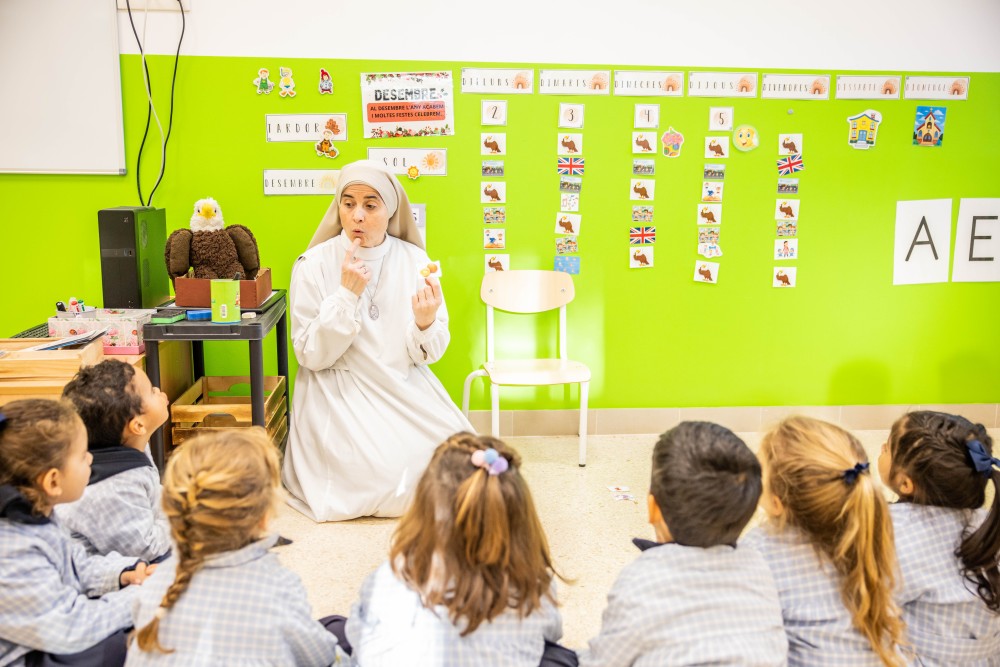
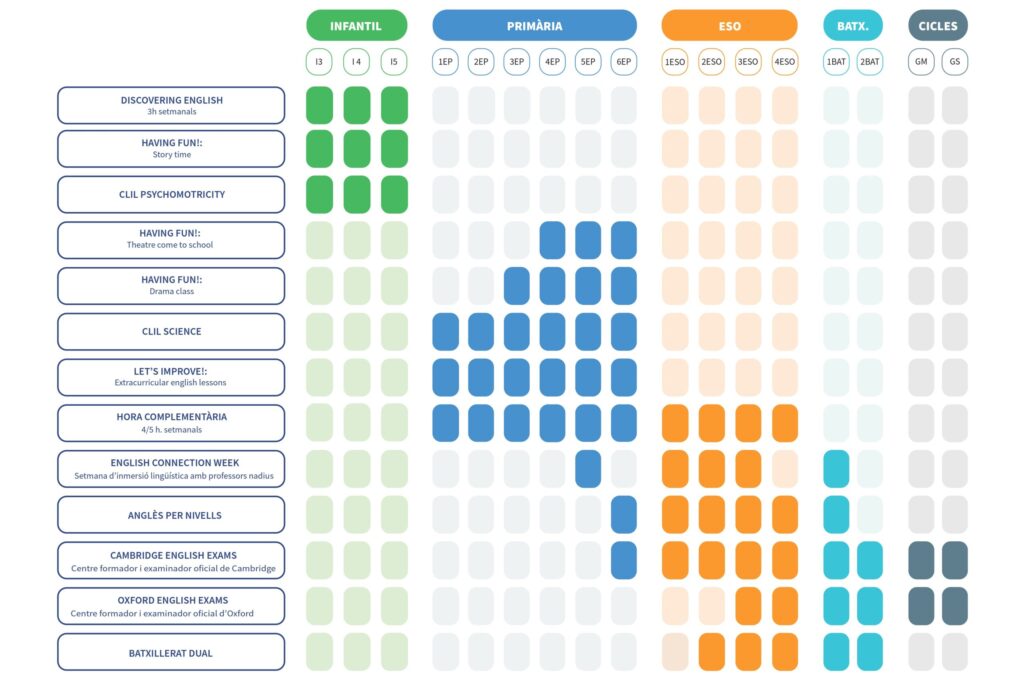
For over fifteen years, our school has made a strong commitment to the English language. Each lesson is taught by four teachers, as we work in ability sets.
Level 1+ is for pupils who have a high level of knowledge; Level 1 is for those whose knowledge corresponds to their year group; and Level 2 is for those who have difficulties learning English. The largest group is always split in two. This way of working allows us to meet the different needs of our pupils and bring out the best in each of them. The groups are entirely flexible in order to keep pupils motivated.
In addition, we are an Official Cambridge and Oxford Examination Centre. This is a great advantage, as pupils sit their official FLYERS, MOVERS, PET, FIRST, Advanced or OTE qualification at school, alongside their own teachers.
We do not neglect the more enjoyable side of learning, and for one week each academic year, our pupils set aside all their other subjects and take part in the English Connection Week — a language immersion week during which they work on a project with native-speaking teachers
Finally, our school offers Secondary pupils the opportunity to study for the Dual Diploma, a programme that enables them to obtain both the Spanish Bachillerato and the American High School Diploma simultaneously.
In addition to English, we offer French as an optional second foreign language. Pupils who choose to take on a new language enjoy the same advantages as with English, as we work with the Alliance Française and official DELF A1, DELF A2, DELF B1 and DELF B2 examinations, all of which are sat at school.
El Pinar is fully committed to languages, and when our pupils complete their studies, they leave with a well-stocked rucksack — full of knowledge, values and, of course, the official qualifications needed for university and working life.
Emotional Education in Primary
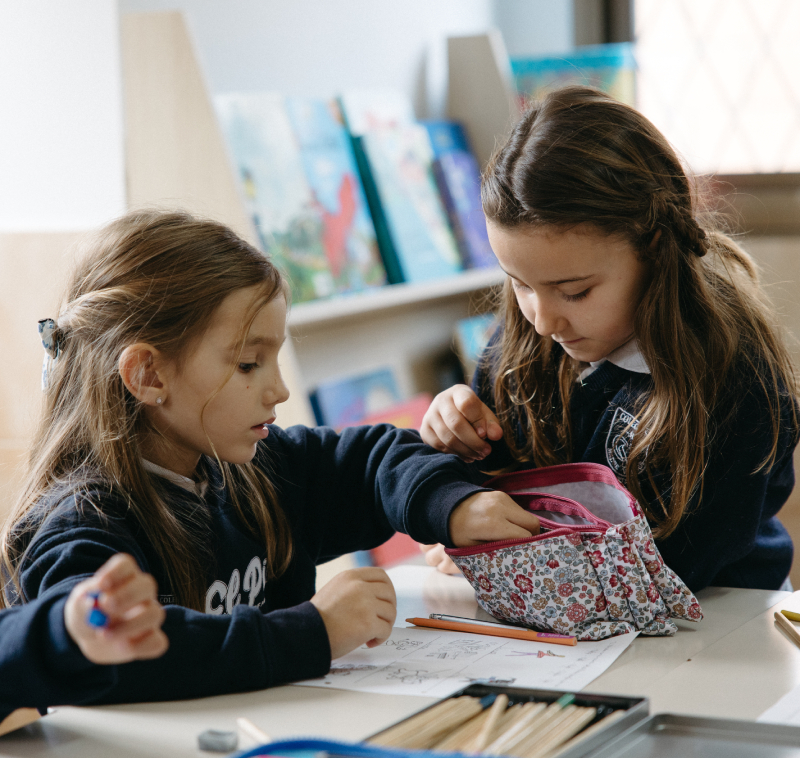
This project aims to support Primary pupils in developing emotional awareness and the personal skills needed for their wellbeing and positive relationships within the school environment.
Through activities adapted to each stage, pupils learn to recognise, express and regulate their emotions, as well as to understand the emotions of others, fostering more respectful relationships and a positive classroom atmosphere.
The work focuses on areas such as:
The approach incorporates basic knowledge of how the brain and emotions work, helping children to understand what happens when they feel something and how they can respond in a more conscious way.
This project forms part of the school's commitment to the integral development of its pupils, understanding emotional education as a fundamental pillar of learning, community life and personal growth.
At our school, we understand reading as an open door to new worlds — a way of awakening the imagination and growing as people. For this reason, we work to ensure that our Primary pupils not only learn to read well, but also discover the pleasure of reading and incorporate it as a natural habit in their daily lives.
Our reading plan has a dual objective: to develop reading competency and to foster a love of reading. We want children to understand, interpret and enjoy texts, while also finding the books that captivate them and make reading an enriching and enjoyable experience.
To achieve this, we dedicate between 20 and 30 minutes each day to reading within the school timetable, and we use a range of strategies adapted to each situation. We alternate between reading aloud by the teacher and by pupils, shared reading between peers, and individual reading — whether using the same book for the whole group or personalised reading based on the interests and needs of each pupil. We also incorporate hands-on materials to make reading more dynamic and motivating, helping children to interact with texts and deepen their understanding.
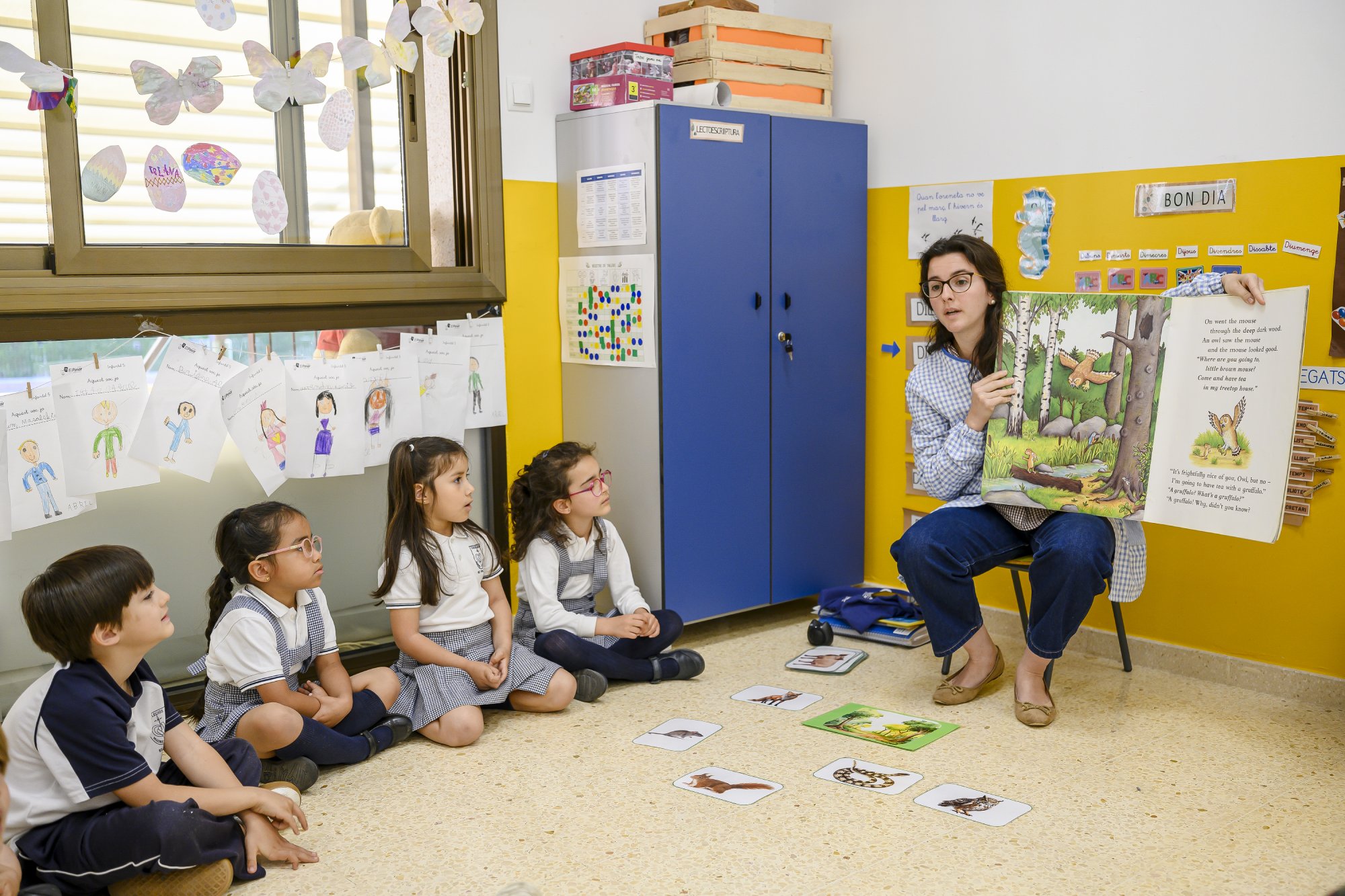
At home, we want to bring reading into the daily lives of families. For this reason we have created "Travelling Books: an adventure to share". Every fortnight, pupils choose a book in Catalan or Spanish and take it home to enjoy at their own pace. Once read, they can share their experience in different ways: by completing a reading record sheet, or by telling their classmates about the story — all while sharing what the book made them feel. In this way, we not only reinforce reading comprehension and oral expression, but also foster the pleasure of reading and the joy of sharing stories.
At school, we believe that reading is a powerful tool for the development of emotional education. Through books, children can identify and express feelings, put themselves in the shoes of the characters, and better understand situations that they themselves and others experience. For this reason, we select books that promote empathy, emotional management and personal reflection, helping pupils to grow not only as readers, but also as people.
With this commitment, we want every boy and girl to leave school not only with strong reading skills, but also with the desire to keep reading, learning and dreaming through books.
In the Primary stage, our school develops a STEAM project each academic year over a two-week period, in which all pupils actively participate in an interdisciplinary challenge integrating Science, Technology, Engineering, Art and Mathematics.
The aim of this project is to foster meaningful learning through practical, creative and cooperative experiences. Each year, we propose a central theme that serves as the common thread running through all the activities. Some examples from previous years include:
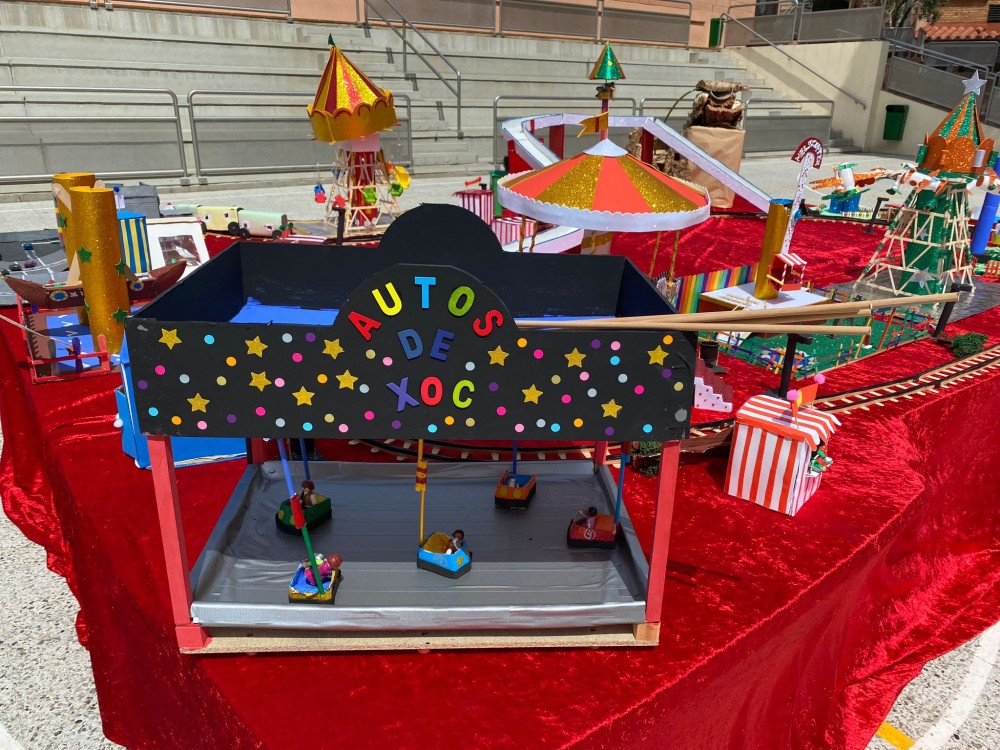
During these two weeks, the classroom is transformed into a space of experimentation, ingenuity and creativity, where pupils design, build, test and present their proposals, collaborating with classmates and teachers from different year groups and subject areas.
The STEAM methodology not only enriches curricular content but also develops skills such as teamwork, problem-solving, communication and innovation, while awakening children's curiosity and critical thinking.
The school has participated in the Codi Escola 4.0 Programme (funded by the Spanish Ministry of Education, Vocational Training and Sport), which has provided a grant of €20,149.19 for the purpose of acquiring robotics, programming and computational language equipment. This equipment is already in use at the school and pupils are using it with very satisfying results.
Fes clic i coneix més sobre El Pinar de Nuestra Señora.